
The Fellowship to abolish slavery - Thomas Clarkson
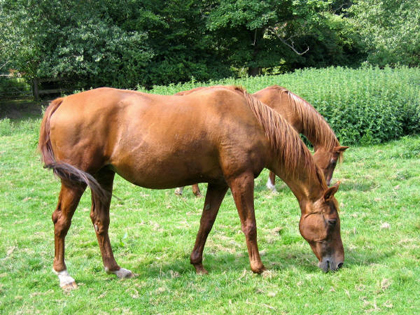
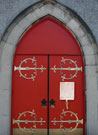
Wadesmill, Hertfordshire where Thomas Clarkson, riding to London, had his revelation.
Image: Blue Tiger
Thomas Clarkson looked like Friar Tuck without his cowl when he left Cambridge on horseback in June 1785. He was 25, tall, heavy-set and red-haired. He had recently been ordained a deacon, but like Tuck he was not thinking about his career as a clergyman. As he rode toward London, Thomas Clarkson thought about the horrible thing he had learned at Cambridge.
Dr Peter Peckard, vice-chancellor of Cambridge, had set the Latin essay prize question as Anne liceat invitos in servitutem, ‘Is it lawful to enslave the unconsenting?’ Peckard had become passionately angry about slavery after reading about the trial of the captain of the Zong, who had thrown handcuffed Africans into the sea to collect insurance.
Thomas ‘Tuck’ Clarkson decided to win the prestigious prize, but this necessitated some research, as he knew nothing about slavery or the Atlantic slave trade. There was not much information, but as he read James Ramsay’s essay and the diaries of a slave captain and questioned his younger brother, who had seen slaves in the West Indies, he became increasingly distrubed. The practices of the slave trade and slavery seemed monstrous to him: children torn away from their parents and left to die or sold to others, women violated, men manacled and mutiliated and murdered if they resisted.
In addition to the Middletons, Granville Sharp, Ramsay, and Clarkson, another group of Christians had set themselves against the slave trade. These were the Friends or Quakers. Their belief in human equality and their contemplative search for God’s light and dislike of church ritual had made them socially suspect. Persecuted, they had gravitated toward business, and maintained a network of Friends across Britain. They had begun publishing anti-slavery pamphlets, but because they were Quakers they were ignored.
Unlikely as it may sound, Clarkson’s prize-winning essay had made him famous. When he decided to translate it into English, a London publisher who thought it would appeal to “people of taste” offered to print it. Clarkson wanted more than a tasteful appeal, and walked out of his shop. Serendipity or providence striking again, he immediately bumped into a Quaker who asked him why he hadn’t published his essay, and took him to see James Phillips and Granville Sharp, who, he learned, was a distant relation. Sharp edited his essay, and Phillips published it in 1786 as The Slavery and Commerce of the Human Species, Particularly the African.
The Friends, who needed an Anglican face for their campaign, were thrilled. So was James Ramsay. He had spent the two years since the publication of his essay defending himself from the violent personal attacks of men invested in the trade in Britain and the West Indies. He felt under siege, and exhausted.
Clarkson spent a month with Ramsay and the Middletons in Teston. With Ramsay he felt as if he had found his father, who had also been a clergyman. His father had died after visiting a poor ill family when Thomas was six, and Thomas carried his lantern stashed in his bag when he travelled.
Strategizing with Ramsay and the Middletons, Thomas realized he had to learn more about the trade’s impact on sailors. The slave trade had been portrayed as good employment for thousands of British sailors. Charles Middleton, now an MP, was certain this was false, and thought it would be an effective weapon in the fight to end the trade. He also had his eye on a young man he thought would champion abolition in the House of Commons: William Wilberforce.
Clarkson returned to London, and with Middleton’s name as an introduction set up interviews with anyone in the Navy who knew anything about the slave trade. At night he pored over the records of the Customs House, where ship musters were kept. Working as late as 3 am, until his blue eyes were inflamed, then walking home through the silent streets, he faced the extraordinary truth that 20% of crews never returned from slave voyages. They died from yellow fever, malaria, dysentery or injuries.
On May 22, 1787, Thomas Clarkson joined Granville Sharp and the Quaker Friends to launch a public campaign to end slavery. The challenge was vast. “In all human experience there was no precedent for such a campaign” (Bury the Chains, Adam Hochschild).
There was no precedent for their campaign techniques, either. Many of them have become modern stand-bys, from investigative reporting to posters, newsletters, petitions and campaign buttons. But some of their most effective organising principles have been forgotten.
Shrewd, capable businessmen, the Quaker Friends hired a lawyer, opened a bank account, and rented a room where, after their businesses closed, they met at night. They took no votes. They made decisions as Friends did, by consensus. Those who have experienced this kind of decision-making (Horatio Nelson will employ it at critical junctures) know how effective it can be in arriving at the best decision and building a team.
They established that three would be a quorum. Be there or be nowhere, they would not keep business waiting for more than three members to appear. Besides, they trusted each other, and had confidence that if business delayed them, decisions guided by Christian principles and intelligence would be made.
They developed detailed lists (now in the British Library) of every task and every possible supporter in Britain and who would be their contact. They decided to focus on the slave trade first, figuring that beating the trade would end slavery.
Their first task was to seek out information that could be presented to the Privy Council and Parliament. Clarkson said he was their man, but as he rode toward the two slave-trading ports of Bristol and Liverpool, he wondered whether he would “get out of it alive.”
Once in town he worked feverishly at the customs houses, docks and taverns. He learned what had happened to 20,000 sailors who had failed to return and the slave trade’s brutalization of those who survived. He found the implements of the trade – shackles, handcuffs, whips, thumb-screws and the speculum oris used to pry apart a man’s jaws so he could be force-fed. He collected ivory, gum, rice, pepper, cloth, and rice from Africa to persuade the public that an alternative profitable trade existed.
In Liverpool he was violently attacked, but his physical strength saved him. Dr Alexander Falconbridge, who had served on four slave voyages, offered to be a witness to the infamy of the trade. Carrying a concealed gun, he also became his bodyguard.
Thomas Clarkson rode 35,000 miles, visiting “Manchester, Bath, Gloucester, Worcester, Chester, Lancaster, and Birmingham” (DNB) and many smaller towns. Everywhere he went he found Brits who wanted to hear about the trade, and once they had heard about it, to oppose it. In Manchester, where better working conditions, lower taxes and religious freedom were also hot issues, 10,000 people – one out of every five – signed a petition calling for abolition.
With a large part of the investigative reporting done, and the movement gaining strength, it was to Parliament and William Wilberforce that Clarkson, the Friends, Ramsay, Sharp and the Middletons now turned. The success of the Fellowship will turn on William Wilberforce.
To be continued. Part One of the The Fellowship to abolish slavery is here.